
iPhone Calls Not Going Through? 5 Ways to Fix Call Failed
When an iPhone suddenly refuses to make a call, the first reaction is often to blame the phone. But a “Call Failed” message does not automatically mean something is wrong with the hardware.
The problem can be as simple as a temporary cellular connection issue, or it may involve your carrier, phone line, SIM or eSIM.
The key is to avoid changing too many settings at once.

Quick Answer
Start with a simple test: call another number.
If every call fails, turn Airplane Mode on briefly, turn it back off, and try again. If your iPhone still has 5G, texts, or mobile data but voice calls are not working, check your carrier before resetting anything.
Users who recently changed carriers, transferred a phone number, activated an eSIM, or started using Dual SIM should also check the affected cellular line.
Reset Network Settings should come later, not first. A full factory reset is usually unnecessary for a Call Failed problem.
What Does Your iPhone Call Problem Look Like?
Not every failed call has the same cause. Before changing settings, check which situation matches what you are seeing.
Calls Fail With Every Number
If calls to several unrelated numbers all fail, the problem is more likely to involve your cellular connection, carrier service, account, or phone line.
Try the quick network reconnect in the next section before doing anything more complicated.
Only One Number Won't Go Through
If you can call other people normally, avoid resetting your iPhone.
The problem may be limited to that specific number or the way the call is being routed between networks.
Try the number again later and test another contact first.
iPhone Shows SOS or No Service
This points more directly toward a cellular service problem.
Check whether the issue changes when you move to another location. If SOS or No Service continues, check your carrier coverage, cellular line, SIM, or eSIM.
5G Works but Calls Keep Failing
A working cellular data connection does not guarantee that voice calling is working normally.
If 5G, mobile data, or texts still work but calls consistently fail, the problem may be related to your carrier's voice service or the cellular line on your account.
Ultra-Thin MagSafe Back Plate Series
ZEERA MagSkin Air Ultra-Thin Magnetic Plate
- Only 0.3mm thin
- MagSafe compatible
- Preserves Air feel
- Light back guard
- Case-free carry

ZEERA MagSkin Pro Ultra-Thin Magnetic Back Plate
- Ultra-thin Pro fit
- MagSafe compatible
- Bare-phone feeling
- Camera deco guard
- Minimal daily carry

ZEERA AirFlat Lens Cover for iPhone Air
- Makes back flat
- Stops desk wobble
- Protects camera lens
- Slim matching look
- Easy clean design

5 Ways to Fix iPhone Calls Not Going Through
1. Reconnect Your iPhone to the Cellular Network
If calls suddenly stop working, start by reconnecting your iPhone to the cellular network.
Open Settings and turn on Airplane Mode. Wait about 5 seconds, then turn it off and wait for the cellular signal to return.
Make another test call.
If the call still fails, restart your iPhone once and try again.
If calling starts working after either step, you can stop here. There is no need to reset network settings or make changes to your SIM or eSIM.
2. Check Your Carrier and Phone Line
If calls still fail, find out whether the problem is coming from your carrier rather than the iPhone.
Try calling several different numbers. If possible, make another call from a different location.
You can also check another phone using the same carrier. If both phones have trouble making calls, a carrier-side problem becomes much more likely.
Check with your carrier if:
- Every outgoing call fails.
- The problem happens in different locations.
- Your account was recently changed.
- Your number was recently transferred.
- Calling stopped working without any changes to your iPhone.
Ask the carrier to confirm that your account and phone line are active and that there is no outage, restriction, or provisioning problem affecting voice calls.
If everything looks normal on the carrier side, continue with the checks below.
3. Check Your SIM or eSIM
This step is especially important if the problem started after changing your carrier, phone number, SIM, or eSIM.
Check the cellular line if you recently:
- Switched carriers.
- Transferred your phone number.
- Activated a new iPhone.
- Installed a new SIM.
- Added or transferred an eSIM.
- Started using Dual SIM.
Go to:
Settings > Cellular
Make sure the correct cellular line appears and is turned on.
If you use Dual SIM, confirm that you are placing the call from the intended phone number.
For an eSIM, you can turn the affected cellular line off and back on, then restart the iPhone.
Do not delete the eSIM just to test whether it fixes Call Failed. If the line still does not work, contact your carrier before removing the eSIM profile.
4. Update Carrier Settings and iOS
Outdated carrier settings can sometimes affect how an iPhone connects to the cellular network.
Go to:
Settings > General > About
Stay on the page for a few seconds. If a carrier settings update is available, you should see a prompt to install it.
Then check:
Settings > General > Software Update
If an iOS update is available, install it when appropriate.
An iOS update should not be treated as the first fix for a single failed call. It is more useful when the calling problem continues after the basic carrier and cellular checks have already been completed.
5. Reset Network Settings
If calls still fail after checking the carrier, cellular connection, SIM or eSIM, and available updates, you can reset the iPhone's network settings.
Go to:
Settings > General > Transfer or Reset iPhone > Reset > Reset Network Settings
This will not erase your photos, apps, or messages.
However, it will remove saved network information such as Wi-Fi passwords and some VPN or APN settings.
After the reset:
- Wait for your iPhone to reconnect to the cellular network.
- Reconnect to Wi-Fi if needed.
- Make another test call.
If calls still fail after this step, do not automatically factory reset the iPhone. At this point, it is better to confirm again whether the problem is with your carrier or the device itself.
ZEERA MagSafe Wireless Charging Series
ZEERA MagTri Gen2 Qi2.2 Foldable MagSafe Charger
- 25W Qi2.2
- 3-in-1 fold
- Active cooling
- Travel size
- 3-device ready
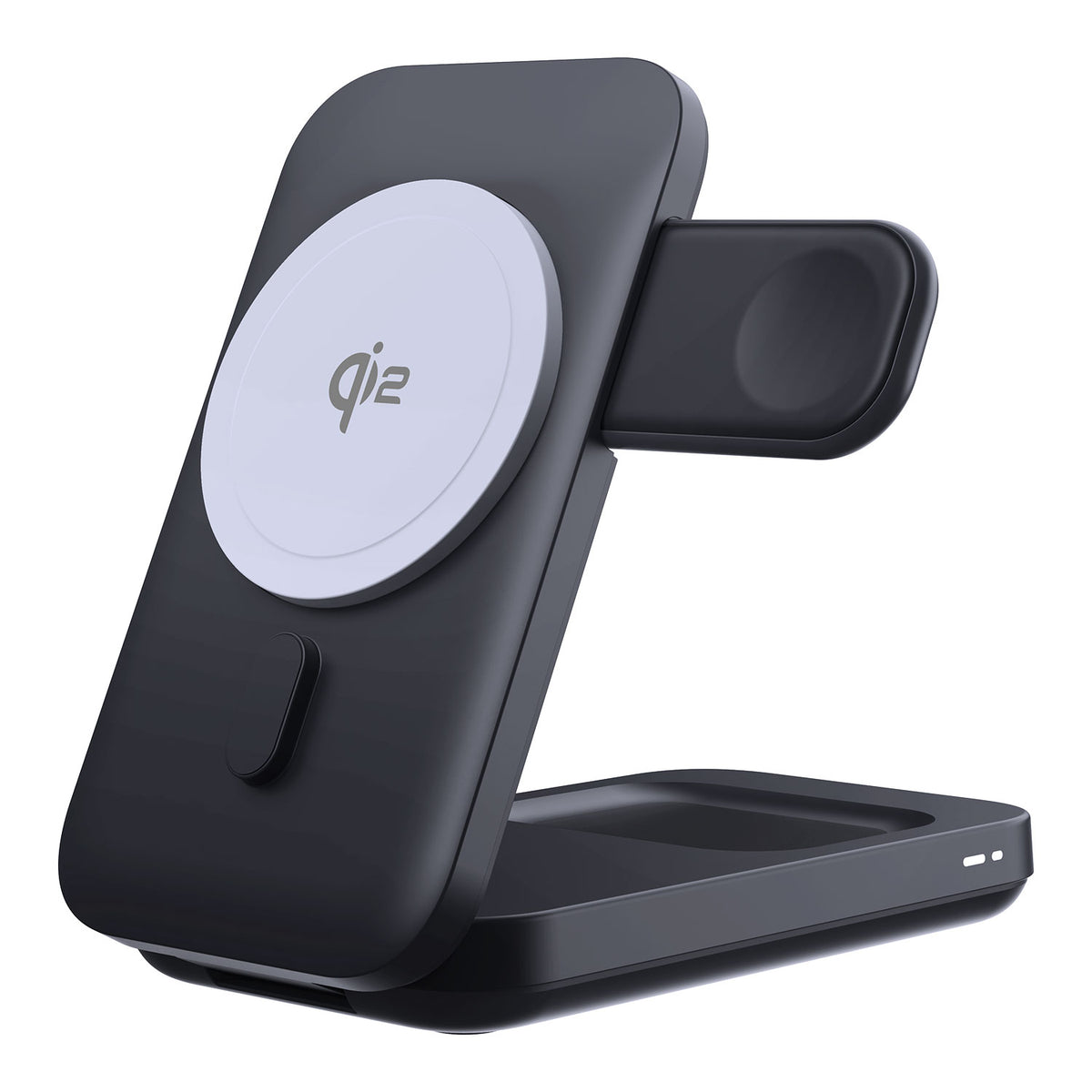
ZEERA MagSion 5-in-1 Dual MagSafe Charger Stand
- Dual MagSafe
- 5-in-1 stand
- Watch charging
- Angle adjust
- Clean setup

ZEERA SuVolt Gen5 Qi2.2 Active Cooling Car Charger
- 25W Qi2.2
- Active cooling
- Strong magnet
- CarPlay ready
- Heat control

What If You Can Make Calls but Can't Receive Them?
This is a different problem.
If outgoing calls work normally but incoming calls never arrive, repeating all of the steps above may not help.
Instead, check the settings that can prevent or redirect incoming calls.
Start with Focus:
Settings > Focus
Make sure a Focus mode such as Do Not Disturb is not filtering the calls you expect to receive.
Then check:
Settings > Apps > Phone
Review:
- Blocked Contacts
- Call Forwarding
- Silence Unknown Callers
If incoming calls still do not reach the phone even though outgoing calls work normally, contact your carrier and ask it to verify the line and call handling on the network side.
Who Should Fix It: Your Carrier or Apple?
After working through the checks above, you should have a better idea of where the problem is coming from.
Start With Your Carrier If:
- Calls fail across several different numbers.
- The problem happens in multiple locations.
- Your iPhone repeatedly shows SOS or No Service.
- Your number was recently transferred.
- You recently changed carriers, SIMs, or eSIMs.
- Your account or phone line may have an activation problem.
The carrier can check things that changing iPhone settings cannot fix, including account status, line provisioning, voice-service restrictions, and network-side call errors.
Contact Apple If:
Your carrier confirms that your account, cellular line, SIM or eSIM, and network service are operating normally, but the problem continues only on one particular iPhone.
At that point, troubleshooting the device itself makes more sense than repeatedly changing carrier-related settings.
FAQ
Why Does My iPhone Show 5G When Calls Aren't Working?
The 5G indicator shows that your iPhone has a cellular data connection. It does not guarantee that every part of your carrier's voice service is working normally.
If websites, apps, and texts work but calls to several numbers consistently fail, check the carrier as well as the phone.
Does “Call Failed” Mean Someone Blocked Me?
No. A Call Failed message by itself does not tell you that another person has blocked your number.
If only one specific number fails while every other call works, avoid changing network settings just because of that one call.
If calls to many different numbers fail, the problem is much more likely to involve your cellular connection, carrier, phone line, or iPhone settings.
Bottom Line
If your iPhone suddenly stops making calls, start small. Identify whether the problem affects one number or every number, reconnect cellular service, and determine whether the carrier is involved before changing deeper settings.
SIM or eSIM troubleshooting and Reset Network Settings are useful when the symptoms point in that direction, but neither should be the first response to a single Call Failed message.


