
iPhone Duo vs iPhone Ultra vs iPhone Fold: What Will Apple Call Its Foldable iPhone?
Quick Answer:
iPhone Duo is now the latest reported name for Apple’s first foldable iPhone. The same upcoming device has previously been widely called the iPhone Fold and iPhone Ultra.
These are not expected to be three different foldable iPhones. They are different names used during the same rumor cycle.
iPhone Fold began as the most obvious descriptive nickname, iPhone Ultra later emerged as a possible premium name, and current reporting now points more directly to iPhone Duo.
Apple has not officially confirmed the retail name, so iPhone Duo should still be described as reported rather than official.

This article is based on public supply chain rumors, analyst predictions, and ZEERA’s previous foldable iPhone coverage. Apple has not officially announced the product name, specifications, price, or release date.
iPhone Duo vs iPhone Ultra vs iPhone Fold: Are They the Same Phone?
Yes. In current rumor coverage, iPhone Duo, iPhone Ultra and iPhone Fold generally refer to Apple’s same upcoming foldable iPhone, not three separate models.
| Name | How It Is Used |
|---|---|
| iPhone Duo | Latest reported name |
| iPhone Ultra | Earlier rumored premium name |
| iPhone Fold | Long-running descriptive nickname |
| Foldable iPhone | Generic category term |
Why Did the Name Change From iPhone Fold to iPhone Ultra to iPhone Duo?
iPhone Fold was the earliest popular name for Apple’s first foldable iPhone, simply because it described the expected book-style folding design.
Later, iPhone Ultra became a widely used rumored name, reflecting the device’s expected premium positioning above the Pro Max lineup.
Now, iPhone Duo is emerging as the latest reported name for Apple’s foldable iPhone. The three names generally refer to the same upcoming device rather than separate models.
For a complete overview, see our What Is the iPhone Duo? Apple’s First Foldable iPhone Explained. You can also check the latest iPhone Duo price report.
Is iPhone Duo the Official Name?
No. Apple has not officially confirmed the name iPhone Duo.
| Question | Current Status |
|---|---|
| iPhone Duo | Latest reported name |
| iPhone Ultra | Earlier rumored name |
| iPhone Fold | Descriptive nickname |
| Official Apple name | Not confirmed |
Expected Release Date: September 2026
Current rumors suggest Apple’s first foldable iPhone could launch in September 2026, likely alongside the iPhone 18 Pro series. If accurate, this would make the foldable model part of Apple’s biggest annual iPhone event rather than a separate mid-cycle product.
Some supply chain reports suggest the device has moved through early validation stages, including trial production and engineering verification. Other reports mention possible timing adjustments around mass production. Even so, the broader expectation remains that Apple is targeting a late-2026 launch window.
Initial availability may be limited. A first-generation foldable iPhone would require a new hinge system, a flexible inner display, a different internal layout, and tighter manufacturing tolerances than a regular iPhone. That could make the first wave more expensive and harder to buy at launch.

Design: A Book-Style Foldable iPhone
The first foldable iPhone is expected to use a book-style inward folding design. When closed, it may look wider and more compact than a standard iPhone, with a shape sometimes described as passport-like. When opened, the device could reveal a larger tablet-style inner display.
The most repeated display estimates include:
- Outer display: around 5.3 to 5.5 inches
- Inner display: around 7.7 to 7.8 inches
- Opened aspect ratio: close to 4:3, similar to a small tablet layout
This would make the foldable iPhone very different from the iPhone 18 Pro Max. Instead of simply offering a larger phone screen, it may be designed for reading, note-taking, email, video, split-screen use, and productivity-style tasks.

Thickness and Battery: The 4.5mm and 5800mAh Rumors
One of the most attention-grabbing rumors is Apple’s possible thinness target. Several leaks suggest the foldable iPhone may measure around 4.5mm to 4.8mm when unfolded. When closed, it could be closer to 9mm to 9.5mm, depending on the final hinge design and display stack.
Battery rumors are also ambitious. Some reports suggest the device may use a battery capacity in the 5,400mAh to 5,800mAh range. If true, that would make it one of the largest battery capacities ever associated with an iPhone-style device.
However, a larger battery does not automatically mean record-breaking battery life. A foldable iPhone would also have a larger inner display, more complex screen usage, a high-performance chip, and a thinner body. Power efficiency will depend heavily on the display, chip, thermal design, and software optimization.
Display and Crease: Apple’s Biggest Test
The crease remains one of the biggest challenges for any foldable phone. Apple is reportedly working on advanced display and hinge engineering to reduce the visible crease as much as possible.
This matters because Apple’s first foldable iPhone will likely be marketed as an ultra-premium device. A visible crease, weak hinge feel, or uneven display surface could hurt that premium impression. Apple needs the inner display to look clean, feel durable, and stay reliable after thousands of folds.
The hinge, adhesive layer, metal support structure, display panel, and internal layout all matter here. This will not simply be a normal iPhone with a folding screen. It needs a completely new structure to balance thinness, durability, and screen quality.

Touch ID Instead of Face ID?
One of the most surprising rumored compromises is biometric authentication. Because the foldable iPhone is expected to be extremely thin when opened, Apple may not have enough internal space for a full Face ID TrueDepth system.
Instead, reports suggest Apple may use Touch ID integrated into the side power button, similar to some iPad models. This would save space while still giving users a fast biometric unlock method.
For some users, side-button Touch ID may feel practical and familiar. For others, it may feel like a downgrade compared with Face ID on current iPhone Pro models. This could become one of the most debated hardware choices if the rumor proves accurate.
Camera System: Premium, But Maybe Not Pro Max-Level
The first foldable iPhone may not have the same camera hardware as the iPhone 18 Pro Max. The reason is simple: space.
Foldable phones are harder to design because the internal structure must support two halves, a hinge, a flexible display, and a thin folded body. Large camera modules, especially periscope zoom systems, may be harder to fit without making the device too thick.
Current rumors suggest Apple may use a dual-camera system or a simplified flagship camera layout. If that happens, the iPhone Ultra may not be the best choice for users who care most about zoom range, sensor size, and Pro Max-level photography.
In other words, the foldable iPhone may be Apple’s most advanced design product, but the iPhone 18 Pro Max may still be the safer choice for camera-first buyers.
A20 Pro Chip and iOS 27: A New Software Experience
The foldable iPhone is expected to use Apple’s next-generation A20 Pro chip, likely built around a more advanced chip process. This could help Apple improve performance, battery efficiency, heat control, and AI-related tasks.
Software may be just as important as the hardware. A foldable iPhone needs more than a larger screen. It needs a version of iOS that can take advantage of the inner display without turning the device into a full iPad.
Expected software ideas include:
- Better split-screen layouts
- Optimized app views for the larger inner display
- Side-by-side reading and writing workflows
- Improved video, notes, email, and browser experiences
However, Apple may still keep the device within the iPhone family rather than making it run iPadOS. That would help maintain a clearer product identity: a foldable iPhone, not a pocket iPad.
How Much Could the iPhone Duo Cost?
Current reporting points to a starting price of around $2,000 for the iPhone Duo.
For storage tiers, competitor pricing and whether $2,000 is unusually expensive for a foldable, read our iPhone Duo price guide.
Should You Wait for the iPhone Fold or Buy iPhone 18 Pro Max?
The answer depends on what kind of iPhone user you are.
You may want to wait for the iPhone Fold or iPhone Ultra if you want:
- A larger inner display for reading, notes, email, and multitasking
- Apple’s first major iPhone form-factor change in years
- A more premium product category above Pro Max
- A device that feels closer to a phone-tablet hybrid
You may prefer the iPhone 18 Pro Max if you want:
- The safer and more mature flagship iPhone experience
- The strongest camera system
- Face ID instead of rumored side Touch ID
- Lower first-generation product risk
- Better accessory availability at launch
For most users, the iPhone 18 Pro Max will probably remain the more practical flagship. But for users who want Apple’s biggest iPhone redesign since the iPhone X, the iPhone Fold or iPhone Ultra could become the most exciting Apple product of 2026.
What This Means for Apple’s Future
The most important part of Apple’s first foldable iPhone may not be the folding screen itself. It may be how Apple chooses to position the product.
If Apple calls it iPhone Fold, the message is simple: Apple finally made a foldable iPhone. But if Apple calls it iPhone Ultra, the message becomes bigger. It suggests a new top-tier iPhone category above Pro and Pro Max.
For now, the name, final specs, release date, and price remain unconfirmed. But based on the latest 2026 leaks, Apple’s first foldable iPhone is shaping up to be one of the most important iPhone redesigns in years.
iPhone Duo, iPhone Ultra and iPhone Fold FAQ
Is iPhone Duo the same as iPhone Ultra?
Yes, current reporting generally uses both names for the same expected Apple foldable.
Is iPhone Duo the same as iPhone Fold?
Yes. iPhone Fold was the earlier descriptive nickname for the device now increasingly reported as iPhone Duo.
What is the iPhone Duo?
The iPhone Duo is the latest reported name for Apple’s first book-style foldable iPhone.
Is iPhone Duo an official Apple name?
No. Apple has not officially confirmed the retail name.
Why is Apple’s foldable called iPhone Duo?
The name may reflect its outer and inner displays or its two main modes of use when folded and unfolded.
Will older iPhone Ultra articles still apply to iPhone Duo?
In many cases, yes, because both names have been used for the same expected device. Always check the article date because specifications can change.
Related Reading
- iPhone Fold: Apple’s Biggest iPhone Redesign Since iPhone X?
- iPhone 18 Pro Price Leak: Apple May Keep Base Prices Amid Rising Memory Costs
- When Will Apple TV 4K 2026 and HomePod mini 2 Launch?
- 2026 Apple TV 4K Rumored Specs, Siri Upgrades and Possible September Launch
- Is iPad mini 8 Getting OLED and A19 Pro?

Mac Mini M4 Aluminum Cooling Case
CNC aluminum enclosure for Mac Mini M4 / Mac Mini M4 Pro, improves heat dissipation,
reduces thermal throttling, and enhances Mac Pro-style aesthetics with
premium build quality for desktop setups.
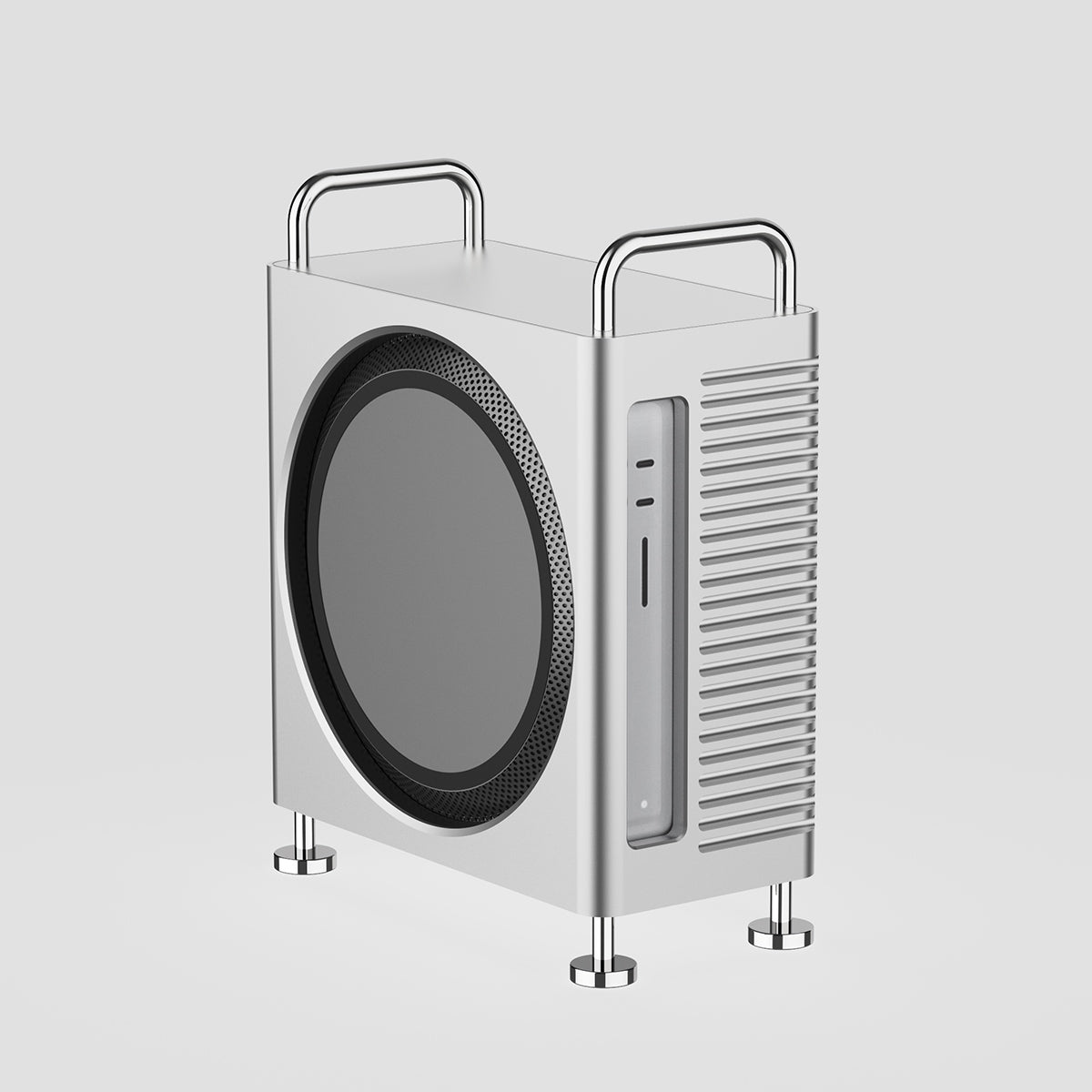
Mac Studio Aluminum Enclosure Case
CNC aluminum enclosure for Mac Studio, improves airflow and thermal performance,
designed for heavy workloads with Mac Pro-inspired structure and stable
high-performance cooling architecture.


