
Mac Pro Discontinued (2026): What Happened and Why Mac Studio Replaced It
Apple Has Officially Discontinued the Mac Pro
As of March 26, 2026, Apple has officially removed the Mac Pro from its online store, confirming the end of its flagship modular desktop.
According to reports from major tech outlets like 9to5Mac and Macworld:
- The Mac Pro is no longer available for purchase
- It has been removed entirely from Apple’s Mac lineup
- Apple has no plans to release a future version
This marks the complete discontinuation of a product that defined Apple’s professional desktop strategy for nearly two decades.

Why Apple Killed the Mac Pro
The decision to discontinue the Mac Pro didn’t happen overnight — it was the result of a slow shift in Apple’s hardware strategy.
For years, the Mac Pro was designed around flexibility and expansion. Professionals could swap GPUs, add PCIe cards, and customize the machine to fit demanding workflows. But that philosophy no longer aligns with how Apple builds computers today. With the transition to Apple Silicon, performance is now driven by tightly integrated chips rather than modular components. While this approach brings major gains in efficiency and speed, it also removes the upgrade paths that once defined the Mac Pro.

At the same time, the rise of the Mac Studio made the Mac Pro increasingly difficult to justify. Mac Studio delivers comparable — and in many cases superior — performance in a much smaller and more affordable package. For most professional users, the real-world difference between the two machines became negligible, especially as software continues to optimize for Apple Silicon.

The Mac Pro also suffered from a lack of meaningful updates. Its last refresh in 2023 left it stuck on older-generation chips, while the rest of Apple’s lineup quickly moved forward. Without a clear performance lead or a unique advantage, the product gradually lost its place in the lineup.

- 2006 — Mac Pro (Intel transition, tower design)
- 2013 — Mac Pro (cylindrical design, unified thermal core)
- 2019 — Mac Pro (modular tower redesign, full PCIe expandability)
-
2023 — Mac Studio (Apple Silicon, M2 Ultra, replacing high-end Mac Pro)
In the end, the Mac Pro wasn’t replaced by a single device — it was made unnecessary. Apple didn’t just remove a product; it moved on from an entire category of computing.

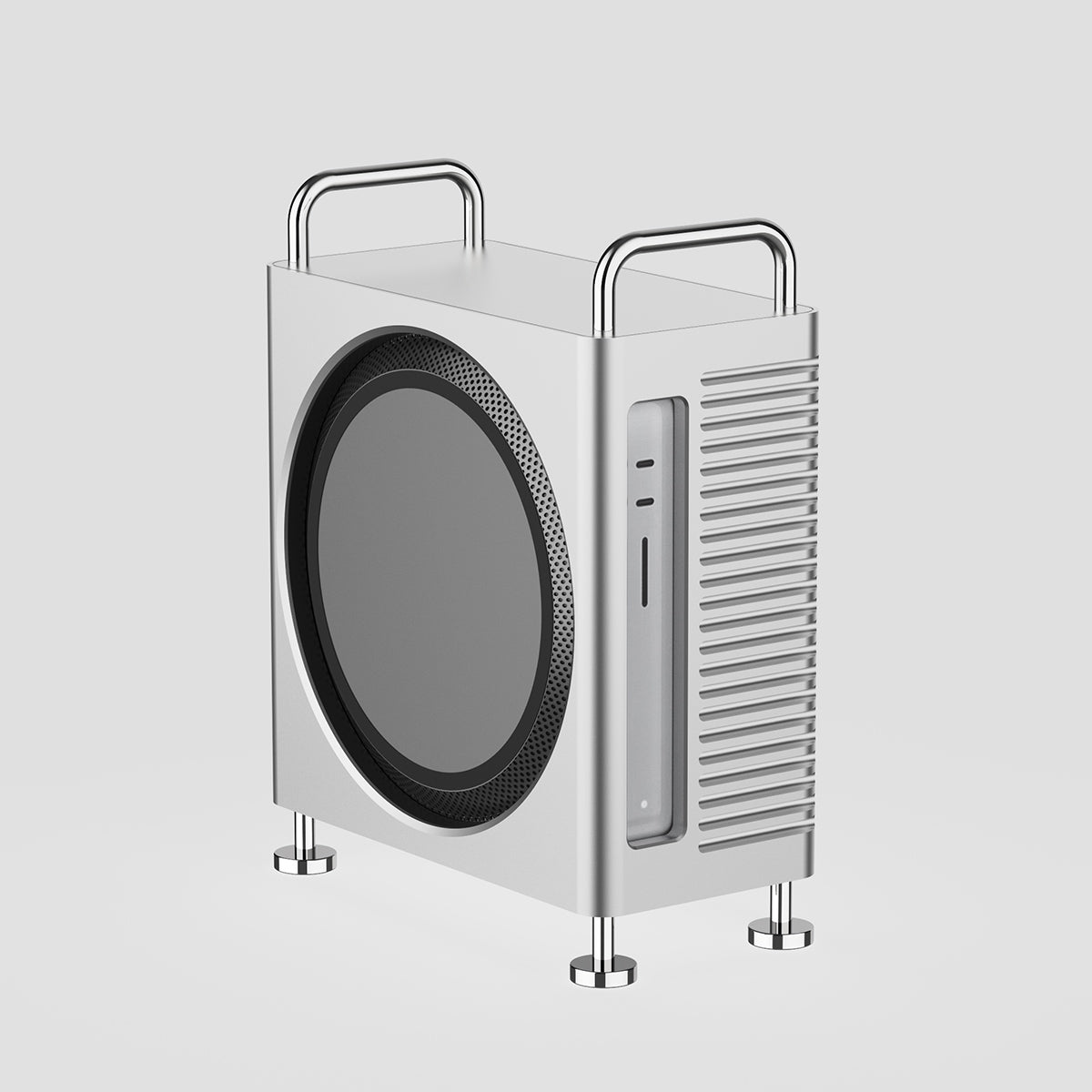
What Replaces the Mac Pro?
Apple’s current desktop lineup is now simplified:
- iMac → mainstream users
- Mac mini → entry to mid-level
- Mac Studio → high-end professionals
👉 There is no direct Mac Pro successor
Instead, Apple is positioning Mac Studio as the new top-tier desktop for:
- Video editing
- Development
- 3D workflows
- AI tasks

The End of an Era
First introduced in 2006, the Mac Pro replaced the Power Mac G5 and quickly became Apple’s most powerful desktop for professional users, widely adopted in video editing, 3D rendering, and creative workflows. Its evolution—from the Intel-based tower, to the 2013 cylindrical design, back to the 2019 modular tower, and finally the 2023 Apple Silicon Mac Pro—reflects how Apple’s definition of pro computing has changed over time.
For nearly two decades, the Mac Pro stood as Apple’s only true workstation-class Mac, built around PCIe expansion and hardware customization. However, with the transition to Apple Silicon, the industry—and Apple itself—shifted toward integrated performance rather than modular flexibility.
Its discontinuation marks more than just the end of a product. It signals a clear transition from modular desktop workstations to compact, high-performance systems, redefining what “pro” means in today’s Mac lineup.

FAQ
Is the Mac Pro coming back?
No. Apple has confirmed there are no future plans for a new Mac Pro.
Why did Apple remove such an important product?
Because its role has been fully replaced by Mac Studio and modern chip architecture.
Is Mac Studio powerful enough for professionals?
Yes. For most users, it now outperforms the Mac Pro at a lower cost.


Final Take
The discontinuation of the Mac Pro is more than just a routine product decision — it reflects a deeper shift in Apple’s long-term strategy. For years, the Mac Pro represented modular power and maximum flexibility, but that approach no longer fits in a world driven by Apple Silicon and tightly integrated systems.
Instead of replacing the Mac Pro with a direct successor, Apple has redefined what a professional desktop should be. Today, performance is no longer about expansion slots or upgrade paths, but about efficiency, optimization, and chip-level integration. In that sense, the Mac Pro wasn’t just discontinued — it was quietly made obsolete by the very technology that now defines the modern Mac.


