
Wireless vs Wired CarPlay: Battery Drain, Heat & Charging Compared
Quick Answer
Wireless CarPlay is better for convenience, while Wired CarPlay is usually better for long drives and continuous charging.
Wireless CarPlay connects automatically without a cable, making it ideal for short commutes and frequent stops. The downside is that your iPhone continues using its own battery unless you charge it separately.
Wired CarPlay usually provides power through the USB connection while CarPlay is running, making it easier to maintain battery level during long drives.
If you prefer Wireless CarPlay but regularly use navigation for hours, a separate wired or wireless charger becomes important. For wireless charging, heat management also matters because navigation, CarPlay and charging can all increase the phone's temperature.

Wireless vs Wired CarPlay at a Glance
| Wireless CarPlay | Wired CarPlay | |
|---|---|---|
| Connection | Wireless | USB cable |
| Convenience | Excellent | Requires plugging in |
| Automatic connection | Usually | No |
| Charging | Requires separate charging | Usually charges while connected |
| Battery drain | More noticeable without charging | Easier to maintain battery |
| Heat | Can be higher under heavy use | Usually easier to manage |
| Short trips | Excellent | Good |
| Long drives | Good with separate charging | Usually better |
| Cable-free setup | Yes | No |
The basic difference is simple:
Wireless CarPlay prioritizes convenience. Wired CarPlay makes power management easier.
For a short drive, that difference may not matter much. During several hours of navigation, it becomes much more noticeable.
Battery & Charging: The Biggest Difference
One of the most common complaints about Wireless CarPlay is battery drain.
The reason is straightforward: Wireless CarPlay does not automatically mean your iPhone is charging.
Your phone may simultaneously be running:
-
Apple Maps, Google Maps or Waze
-
GPS location tracking
-
cellular data
-
traffic updates
-
Spotify or Apple Music
-
calls and messages
-
CarPlay itself
All of these use power.
1. Wireless CarPlay
If you start a drive with 60% battery and do not connect a charger, the battery will naturally decrease while CarPlay and navigation are running.
The effect is usually more noticeable on longer trips.
Wireless CarPlay therefore works best when you either:
-
start with enough battery for the journey, or
-
use a separate charger.
That charger can be wired or wireless.
2. Wired CarPlay
Wired CarPlay has one practical advantage: the USB connection usually provides power while the phone is connected.
That means the same cable handles:
CarPlay + charging
This does not guarantee fast charging. Some vehicle USB ports provide relatively limited power.
But even modest USB power can help reduce how quickly the battery decreases during navigation.
3. Wireless CarPlay + Separate Charging
This is becoming a popular setup because it combines wireless convenience with continuous charging.
For example:
Wireless CarPlay + MagSafe/Qi2 car charger
lets you enter the car, place the phone on a magnetic mount and start driving without plugging in a cable.
The tradeoff is heat.
If your car already has a built-in wireless charging pad, you may not need a separate charger at all. But the two setups behave differently in heat, alignment and long-drive use. See our comparison of built-in car wireless chargers vs MagSafe/Qi2 car chargers.
Don't Overlook the Car's Power Source
A high-output wireless charger still depends on the power available from the vehicle.
Some built-in USB ports are designed primarily for data connections or relatively low-power device charging. If the port cannot provide enough stable power, it can become the bottleneck even when the wireless charger itself supports a higher charging output.
For higher-power Qi2 or Qi2.2 charging, check the charger's required input and use an appropriate car power adapter when necessary.
In other words:
charger capability ≠ power actually available from the car
4. Why Can My iPhone Still Lose Battery While It Says It's Charging?
Why Can My iPhone Still Lose Battery While It Says It's Charging?
Seeing the charging icon does not always mean the battery percentage will increase.
During Wireless CarPlay, the iPhone may be using power for GPS navigation, cellular data, music streaming and background activity at the same time. If that combined workload approaches the usable charging power reaching the phone, the battery may rise very slowly, stay unchanged or even decrease.
Heat can make the effect more noticeable because charging performance may be reduced as the iPhone gets warmer.

Which One Makes Your iPhone Hotter?
Wireless CarPlay can make heat more noticeable, especially when several demanding tasks happen at the same time.
A typical driving setup may look like this:
Wireless CarPlay + GPS navigation + cellular data + music streaming + wireless charging + warm car cabin
Each part adds some power demand or heat.
This does not mean Wireless CarPlay alone will always make an iPhone overheat.
The problem is usually the combined workload.
Wireless charging can add another source of heat because energy must be transferred wirelessly between the charger and the phone.
Direct sunlight can make the situation worse.
If the iPhone becomes too warm, iOS may reduce or temporarily pause charging until the device cools down.
That is why a phone may charge normally at the beginning of a drive but gain battery much more slowly after 20 or 30 minutes of navigation.
With Wired CarPlay, the phone usually has one less wireless charging process to manage, so heat can be easier to control.
But wired use is not automatically cool either. Navigation, cellular activity and a hot cabin can still raise the phone's temperature.
The main difference is that:
Wireless CarPlay combined with wireless charging creates more heat to manage than a simple wired connection.


Which Is Better for Navigation and Long Drives?
There is no single winner. The better choice depends largely on how long you drive.
Short Commutes: Wireless CarPlay
For a 10- to 30-minute commute, Wireless CarPlay is usually the more convenient option.
You get into the car, CarPlay connects automatically and there is no need to plug in a cable.
If your phone already has enough battery, you may not need to charge at all.
This is where Wireless CarPlay is at its best.
Long Drives: Wired CarPlay
For several hours of continuous navigation, Wired CarPlay is often the simpler option.
The advantages are practical:
-
the phone receives power while connected,
-
there is no need for a separate charging mount,
-
wireless charging heat is avoided,
-
battery level is easier to maintain.
If your priority is simply reaching your destination with plenty of battery remaining, wired CarPlay remains difficult to beat.
Long Drives Without Cables: Wireless CarPlay + Charging
Some users still prefer a completely wireless setup.
In that case, Wireless CarPlay plus a MagSafe or Qi2 charger can work well.
This setup is particularly useful if you want the phone mounted where you can easily see navigation information.
But for long journeys, the quality of the charger becomes more important.
A charger that works well for a short commute may struggle when the phone is simultaneously running navigation for several hours in a warm cabin.
If You Prefer Wireless CarPlay, What Kind of Charger Do You Need?
The highest wattage number is not the only thing that matters.
For Wireless CarPlay and navigation, a good car charger should balance charging power, thermal management, magnetic alignment and mounting stability.
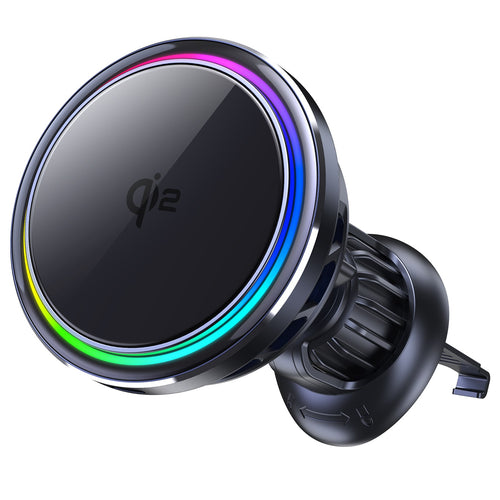
This is where products such as the ZEERA SuVolt Gen5 Qi2.2 Car Charger make more sense for demanding in-car use. It combines up to 25W Qi2.2 wireless charging, active cooling, strong magnetic alignment and a stable air-vent mount in one setup.
That combination is especially useful if you regularly use Wireless CarPlay, navigation and wireless charging at the same time.
The real advantage is not simply the 25W peak specification. In a car, stable charging and heat control can matter just as much as maximum charging speed.

When comparing wireless car chargers for CarPlay, focus on these four areas:
1. Enough Charging Power
Navigation can consume a meaningful amount of energy.
If charging power is too low, the charger may only slow battery drain instead of increasing the battery percentage.
Modern Qi2 chargers can provide higher wireless charging power on compatible phones, including newer Qi2 25W chargers. However, actual charging speed still depends on temperature, battery level, device activity and the power available from the car.
A 25W-capable wireless charger also needs enough stable input power. If the vehicle's built-in USB port or car power adapter cannot provide sufficient power, the input source can become the bottleneck before the wireless charger reaches its full capability.

2. Good Thermal Management
Heat becomes more important when wireless charging is combined with CarPlay and navigation.
Cooling fans or active semiconductor cooling can help reduce heat buildup during longer charging sessions, especially in summer or during extended navigation.

3. Stable Magnetic Alignment
Wireless charging works best when the phone stays properly aligned with the charging coil.
MagSafe and Qi2 magnetic alignment help keep the phone centered while driving, which is especially useful on rough roads.
4. Stable Mounting
A strong magnet is not enough if the entire charger moves or sags on the air vent.
For larger phones such as Pro Max models, the mount itself should remain stable during braking, acceleration and road vibration.
Wireless vs Wired CarPlay: Which Should You Choose?
Choose Wireless CarPlay if:
-
convenience matters most,
-
you mainly take short trips,
-
you frequently enter and leave the car,
-
you dislike connecting cables,
-
your phone usually has enough battery.
Choose Wired CarPlay if:
-
you regularly take long trips,
-
navigation runs for several hours,
-
maintaining battery level is important,
-
your iPhone frequently becomes hot,
-
you prefer the simplest charging setup.
Choose Wireless CarPlay + Qi2 charging if:
-
you want a cable-free setup,
-
you still need charging while navigating,
-
you use a magnetic phone mount,
-
you have a suitable power source,
-
your charger provides good thermal management.
For most users, the choice therefore comes down to one tradeoff:
Wireless CarPlay is better for convenience. Wired CarPlay is usually better for simple, continuous charging on long drives.
If you want both convenience and charging, Wireless CarPlay paired with a properly powered Qi2 charger can provide a good middle ground.
iPhone 18 Pro Max MagSafe Charger & Stand
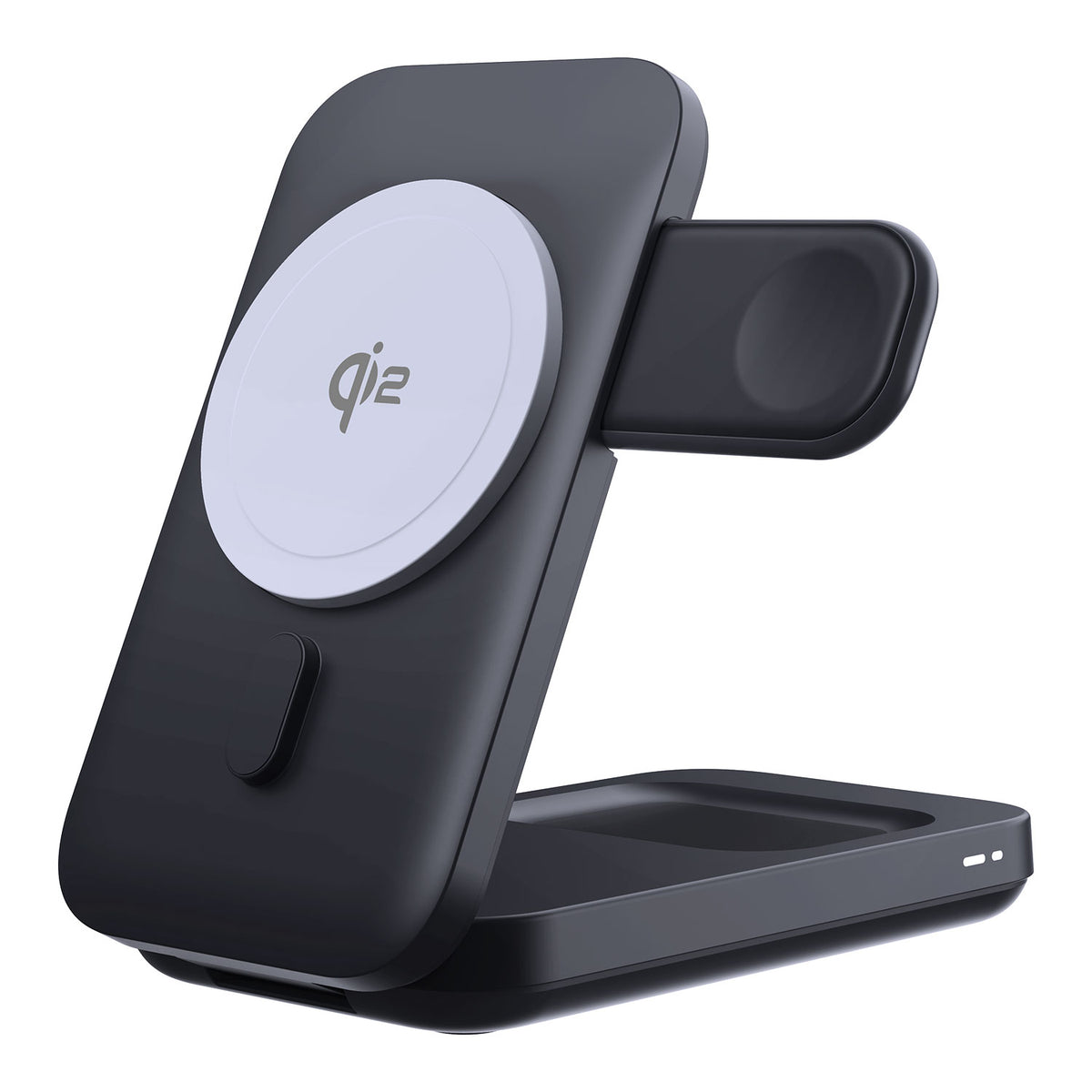
ZEERA MagTri Gen2 Qi2.2 Foldable MagSafe Charger
- 25W Qi2.2
- 3-in-1 fold
- Active cooling
- Travel size
- 3-device ready
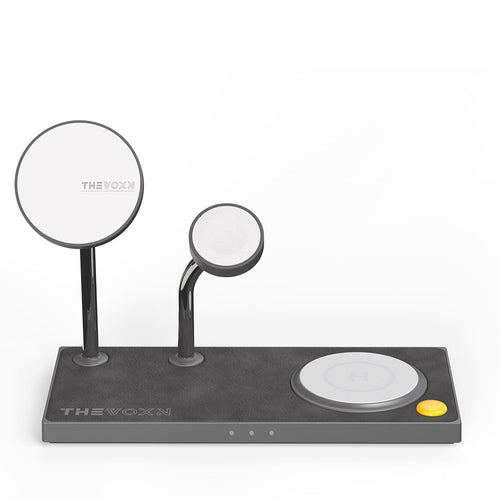
ZEERA MagSion 5-in-1 Dual MagSafe Charger Stand
- Dual MagSafe
- 5-in-1 stand
- Watch charging
- Angle adjust
- Clean setup
ZEERA SuVolt Gen5 Qi2.2 Active Cooling Car Charger
- 25W Qi2.2
- Active cooling
- Strong magnet
- CarPlay ready
- Heat control
FAQ
Can Wireless CarPlay make charging less effective?
Yes, it can. Wireless CarPlay adds to the iPhone’s workload, especially when navigation, streaming and cellular activity are also running. If charging power, heat management and alignment are not strong enough, the battery may increase more slowly during a drive.
Does Wireless CarPlay drain more battery than Wired CarPlay?
Wireless CarPlay can make battery drain more noticeable because the iPhone is not automatically receiving power through a cable. Navigation, GPS, cellular data and music streaming can continue using battery throughout the drive.
Does Wireless CarPlay make an iPhone hotter?
It can, especially when Wireless CarPlay is combined with navigation and wireless charging. The total workload matters more than CarPlay alone.
Can I use Wireless CarPlay and wireless charging at the same time?
Yes. Wireless CarPlay and wireless charging are separate systems, so you can use Wireless CarPlay while charging the iPhone with a compatible MagSafe or Qi2 car charger.
Does Wired CarPlay charge the iPhone?
Usually, yes. When an iPhone is connected to a compatible CarPlay USB port, the same connection normally provides power. Actual charging speed depends on the vehicle's USB output.
Is Wired or Wireless CarPlay better for long trips?
Wired CarPlay is usually simpler for long trips because the phone receives power while connected. Wireless CarPlay can also work well if you use a separate charger with enough power and good heat management.


